Emotionally Unavailable
What It Really Means — and How to Get Through
You talk, and it doesn't land. You ask what's wrong and get "nothing." You raise your voice just to feel heard, and the wall only gets thicker.
"Emotionally unavailable" is the name for what's on the other side of that wall. It's not a diagnosis and not a life sentence — it's a pattern, and patterns have mechanics. This page breaks down how the pattern works, why it hooks you, and what actually gets through it.
Emotionally unavailable means a person has difficulty noticing, naming, and sharing their own feelings, and keeps emotional distance in close relationships. It is a learned protective pattern — most often rooted in avoidant attachment — not a disorder and not the absence of emotion. It shows up as deflection, silence, "nothing's wrong," and withdrawal under emotional pressure, and it can change when the person starts noticing and naming what they feel.

What Does "Emotionally Unavailable" Mean?
An emotionally unavailable person struggles to notice, name, and share what they feel. The feelings exist — often intense ones. What's missing is access to them, and the ability to let another person in.
That's the key distinction: emotional unavailability is not the absence of emotion. It's a locked door between the emotion and the relationship.
Is It a Trait — or a Temporary State?
Anyone can become unavailable for a season. Grief, burnout, a job loss, a new baby: the nervous system goes into power-saving mode, and there's simply nothing left for connection. This usually passes when the load lifts.
Chronic unavailability is different. It doesn't track life events — it is the baseline:
- Situational: has a visible cause, a beginning, and an end. The person can say "I'm not okay lately."
- Chronic: no cause you can point to. Closeness itself is the trigger, and it has always been this way.
The first needs patience. The second needs understanding how the pattern was built — more on that below.
What's Inside: The Feelings Are There, the Access Isn't
From the outside, an emotionally unavailable person looks calm to the point of indifference. Inside, it can be a storm. Here's what that gap looks like in real life.
Mark spent his Saturday morning cleaning the whole house — vacuumed every room, mopped the floors. He wanted to surprise his wife, who kept saying she was worn out. She came home and, instead of a thank-you, started an inspection: "Did you actually vacuum here? What about the hallway? There's still a spot."
Mark said nothing. His face showed nothing. He'd been through this before — and every time, he just went quiet and waited for it to pass.
But that evening it wouldn't pass. Hurt and deflated, a heavy weight in his chest, he opened Evenvoice — mostly to vent. Instead of generic advice, it asked him one precise question after another.

What came out, step by step:
- What looked like calm was a flash of rage — followed by total shutdown.
- He felt like a schoolboy being graded by a strict teacher.
- The real engine underneath, which surprised him most: he tolerated the inspections because he was terrified she'd leave. You can't be furious and terrified of losing someone at the same time — so he froze.
His wife saw a man who felt nothing. The truth was the opposite: he felt too much, with no way to say any of it.
That's emotional unavailability from the inside. Not empty — locked.

Signs of an Emotionally Unavailable Partner
No single sign settles it. What matters is the pattern — several of these, repeating over months, regardless of circumstances:
- "Nothing's wrong" — the default answer to any "what's going on?", even when something clearly is.
- Deflecting with logic — you bring a feeling, they return an argument. The conversation is suddenly about facts, not about you.
- Vanishing under pressure — the more serious the talk, the more urgent their need to leave the room, check the phone, change the subject.
- Affection on their terms only — warmth exists, but only when they initiate it and only in doses they control.
- No future tense — plans, labels, commitments stay vague; pinning anything down feels like pulling teeth.
- Discomfort with your emotions — your tears or joy make them stiffen, joke it off, or go quiet.
- Self-sufficiency as a wall — they need nothing, ask for nothing, accept nothing. Help offends them.
- You feel lonelier with them than alone — the surest sign, and the one people notice last.

Each of these has a mirror: how it feels on your side of the wall. Confusion, self-blame, the constant sense of asking for too much. If that's familiar, the sections below explain where the pattern comes from — and what actually reaches through it.
The Emotionally Unavailable Husband
The most common shape of this pattern in long marriages is the functional husband. He provides. He fixes things. He shows up to every practical duty — and is absent from every emotional one.
Ask wives of emotionally unavailable men what's missing, and it's rarely actions. It's presence:
- He'll drive you to the airport at 5 a.m. — but won't ask why you cried last night.
- "My husband won't talk to me" doesn't mean silence at dinner. It means silence exactly where it matters.
- The marriage runs like a well-managed project. And feels like one.

Many of these men sincerely believe they're good husbands — because in the language they were taught, doing is loving. The gap isn't in effort. It's in the channel: everything flows through tasks, nothing through feelings.
This is also why an emotionally absent husband is often genuinely blindsided by "I'm not happy" or by divorce papers. By the only scoreboard he knows — provision, loyalty, reliability — he was winning.
Emotionally Unavailable Women
The pattern isn't gendered — the packaging is. An emotionally unavailable woman is harder to spot because the social camouflage is better:
- Busyness as armor: the calendar is always full; there's never a quiet moment where closeness could happen.
- Caretaking instead of connecting: she manages everyone's needs, which looks warm, but managing people keeps them at arm's length.
- Irony as a moat: every serious moment gets a joke; nothing lands long enough to matter.
- The "low-maintenance" badge: she prides herself on needing nothing. Partners eventually stop offering.
Underneath, the mechanics are identical: feelings exist, access doesn't. Only the wall is decorated differently.
Am I Emotionally Unavailable?
Maybe you're not reading this page about a partner. Maybe someone said the words about you — in an argument, in a breakup text, in couples counseling — and they've been rattling around ever since.
A quick self-check. Not a test, just five honest questions:
- When someone asks how you feel, do you answer with what you think?
- Does another person's strong emotion — tears, anger, even excitement — make you want to leave the room?
- Do you handle hard things alone on principle, and feel vaguely insulted by offers of help?
- In conflicts, do you go quiet and wait for it to blow over rather than say what's happening inside?
- Do people who love you keep telling you they don't know you?
Two or more "yes" answers point to the pattern. And here's the part that matters: asking "am I emotionally unavailable?" already breaks its main rule. The pattern survives on not being looked at. You're looking.
How to Stop Being Emotionally Unavailable
Nobody becomes open by deciding to be open. The lock wasn't installed by choice, and it doesn't come off by willpower. What works is smaller and more mechanical — three moves, in order:
- Notice. Catch the moment of shutdown as it happens: the flat face, the urge to leave, the "I'm fine." Just register it. That's the whole first skill.
- Name. Find the word for what's actually there — not "fine," not "whatever," but the precise one: cornered, graded, dismissed, scared. Precision is the key that fits this lock.
- Say one sentence. Not a heart-to-heart. One sentence, out loud, to the person it concerns: "When you checked my work, I felt graded." Then stop. One sentence is a door opening a crack — and it's enough.

The hardest step is the second one. Most people who shut down have spent decades not naming — the vocabulary is missing, not the feelings. This is exactly the muscle a structured breakdown builds: Evenvoice walks you from "I'm fine" to the precise word, one question at a time.
Emotionally Unavailable Parents
If any of this page feels less like new information and more like your childhood — this section is why.
Emotionally unavailable parents come in many versions: the emotionally unavailable mother who managed the household flawlessly and never once asked how you felt; the emotionally unavailable father who expressed love through car maintenance and tuition payments; the parent who was physically present and emotionally on another continent.
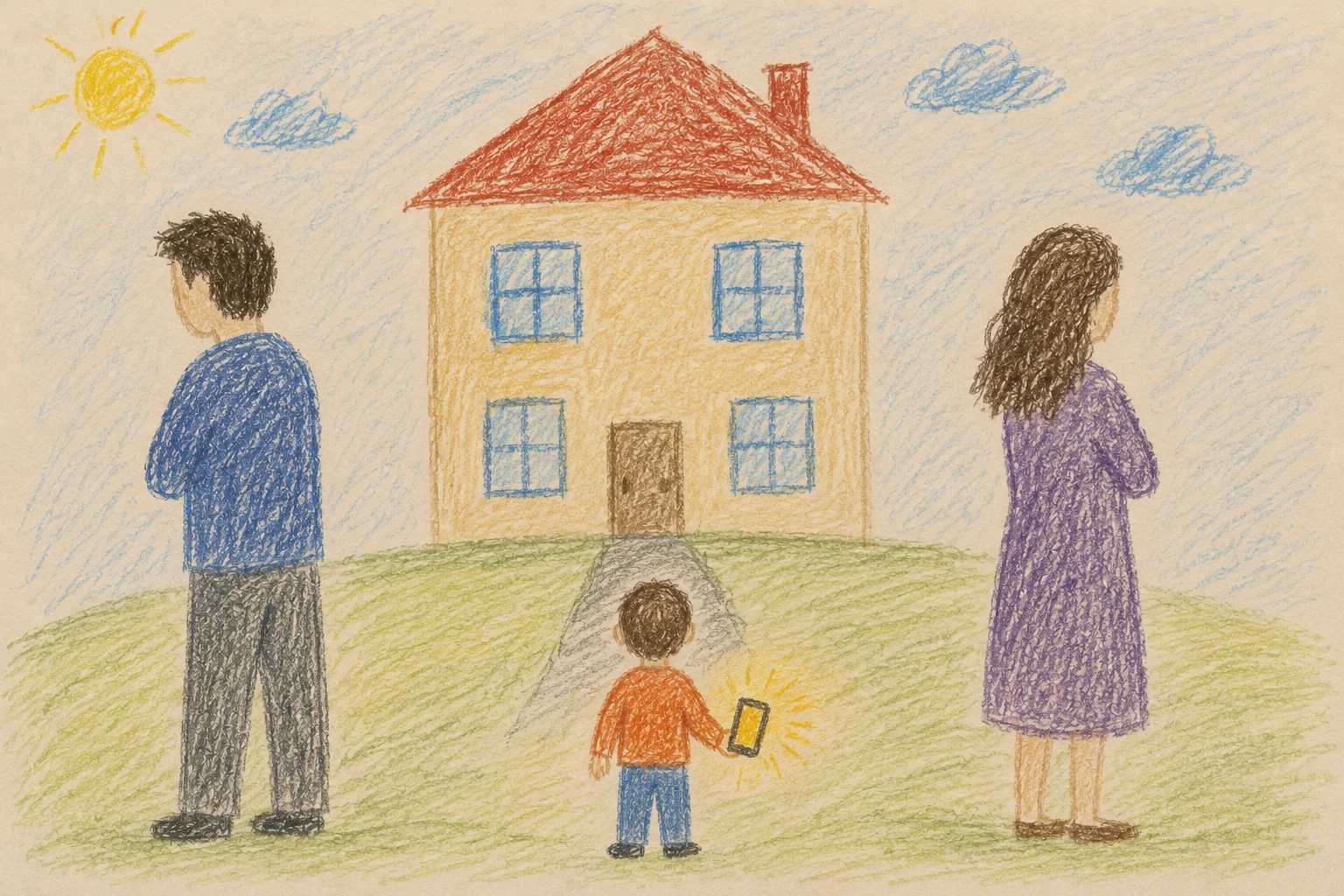
Kevin, 36, moved to Denver after his divorce and finally started breathing. Then the calls began. His father's drinking was worse. His mother — worn down, tearful — unloaded every detail on him, then pushed him to "see a wonderful therapist, I'll pay," because surely this is hard on you too.
After each call Kevin felt physically sick — leaden, guilty, ashamed to be annoyed. One night, feverish and wrung out, he opened Evenvoice instead of answering the phone. He expected to vent about his father. What the questions uncovered was about his mother:
- The suffocating feeling wasn't sadness — it was pity turning into helplessness: she is unhappy, and nothing he does can fix it.
- Under the helplessness sat anger he'd never let himself see: at her refusal to change anything while demanding he feel better on her behalf.
- The guilt had a job: it kept him responsible for her life, the way he'd been since he was a kid.
He wrote it out, sentence by sentence. By the end, the fever had broken company with the guilt: her marriage was hers, her choices were hers, and his life — for the first time — was his.

That's the legacy of unavailable parents in one story: children who learn to read everyone's weather and treat their own feelings as an interruption. Adults who are either magnets for closed partners — or closed themselves.
Which leads to the real question: how does a child's environment turn into an adult's pattern? That's attachment — two sections down.
Stonewalling: When Unavailability Becomes a Wall
Emotional unavailability is a trait — the baseline. Stonewalling is that trait in its acute, visible episode: mid-conversation, the person goes flat, stops responding, walks away or answers in monosyllables. The silent treatment is its long form — hours or days of demonstrative absence.

Here's what changes everything once you know it: stonewalling in a relationship usually isn't punishment. It's overload. Physiologically, the stonewaller is flooded — heart rate spiked, thinking narrowed, system in emergency mode. The wall isn't built to hurt you. It's built because the person behind it is drowning and this is the only pump they know.
That doesn't make it acceptable — chronic stonewalling corrodes relationships faster than open fighting. But it changes what has a chance of working: pressure never does. To someone who's flooded, pressure is more water.
- How to respond to the silent treatment in the moment: don't chase, don't lecture, name and defer. "I can see you can't talk right now. I want to come back to this tonight." Then actually leave the field.
- What doesn't work: following them room to room, escalating until they react, matching silence with silence for a week.
The Pursuit-Withdrawal Cycle
If your fights follow the same script every time, it's probably this one. Psychologists call it pursue-withdraw, and it runs on a cruel joke: each partner's coping strategy is the other's trigger.
Rachel could tell from the sound of the garage door what kind of evening it would be. Quiet door — quiet husband. She'd ask what's wrong. "Nothing." She'd ask again at dinner. "I'm fine." By nine she was following him from room to room, voice rising; by ten she was shouting things she didn't mean; by eleven he was asleep in the guest room and she was awake, hating how she sounded, certain she was losing him — and having no idea how to stop.
After one of those nights she opened Evenvoice — not to fix him, just to understand what kept happening. The breakdown surprised her:
- Her anger wasn't the start of the cycle — it was the end of it. It began as fear: his silence read, to her body, as the connection dying.
- Her raised voice was literally a reach — an attempt to get any response, because even a fight is contact.
- And each escalation confirmed his oldest belief: emotions are dangerous, stay behind the wall. Her pursuit built his wall; his wall fueled her pursuit.
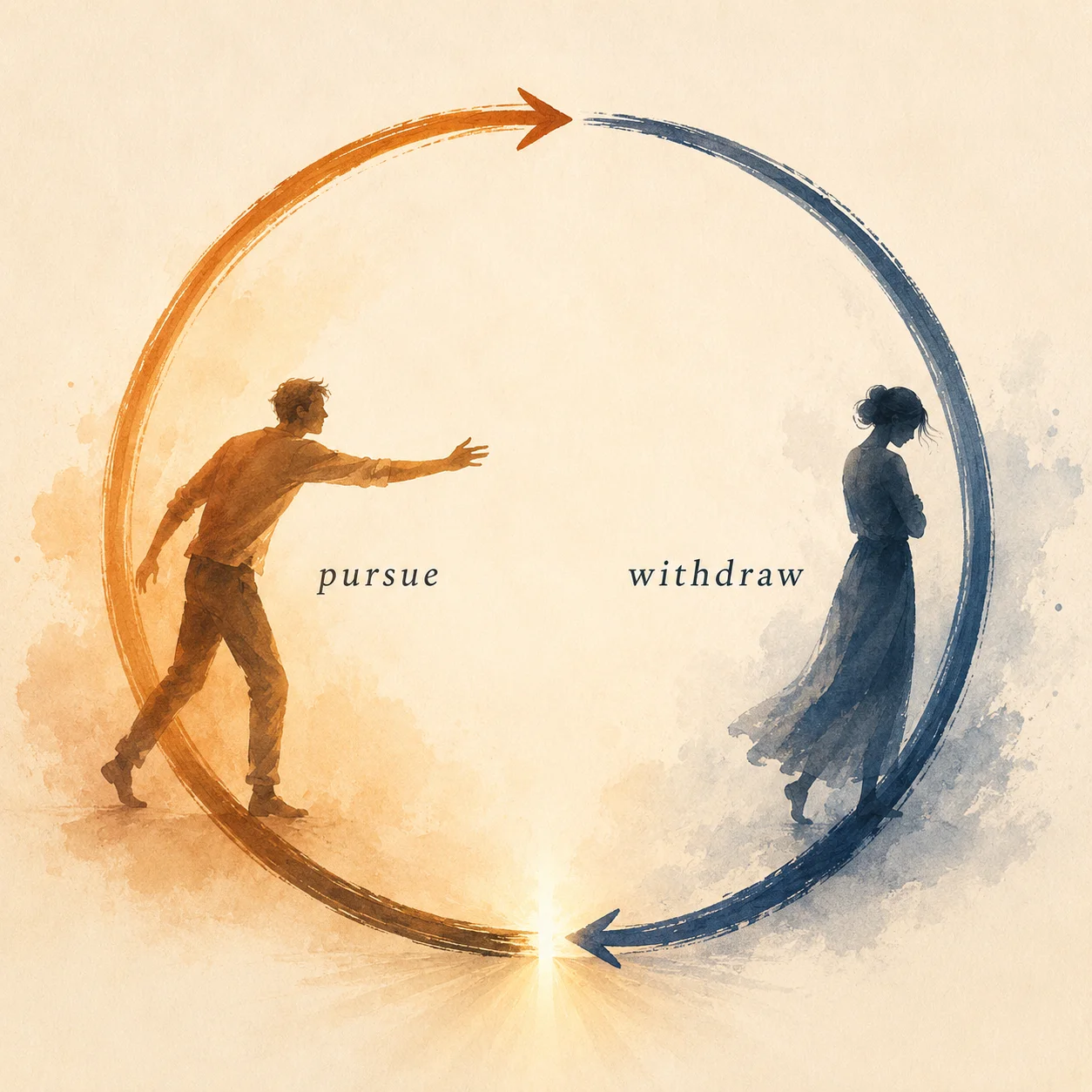
Nobody was the villain. The cycle was. Seeing that, Rachel changed the only half she controlled: the next quiet evening, she said one sentence — "When you go quiet, I get scared, and I start pushing. I don't want to push." — and left the room. It took three more evenings. On the fourth, he came to find her.

Is It Emotional Unavailability — or Gaslighting?
Sometimes the question behind the question is darker: is he closed off — or is he playing me? The distinction matters, because one is a defense and the other is an offense:
- Unavailability avoids the emotional field. Gaslighting operates on it — actively rewriting what happened. "That never happened. You're imagining things. You're too sensitive."
- Unavailability is consistent — the wall is there for everyone, in every conflict. Manipulation is selective: charming in public, rewriting reality in private.
- After contact with unavailability you feel lonely. After gaslighting you feel crazy — doubting your memory, checking old texts to prove things to yourself.
Loneliness says wall. Self-doubt about your own perception says something that deserves its own, more serious conversation.
Why People Become Emotionally Unavailable: Attachment Styles
Nobody chooses the wall. It gets built early, and the blueprint is called attachment — the strategy a child develops for staying connected to caregivers, which then runs adult relationships from below deck.
Two insecure strategies produce two very different kinds of unavailability.
Avoidant Attachment: When Closeness Once Meant Danger
The avoidant attachment style is the classic engine of emotional unavailability. The formula of an avoidant childhood: expressing needs made things worse. Tears were met with "toughen up," fear with ridicule, joy with indifference. The child concludes: feelings are a liability — handle everything alone.
Thirty years later that child is a competent adult with a dead-bolted inner door — and often doesn't know the bolt exists until something small exposes it.
Jason, an IT engineer, had his refrigerator die on a Tuesday. The repairman charged $480 — nearly the price of a new fridge. Jason knew he was being taken. He paid without a word, then spent three days replaying it, disgusted with himself: why couldn't he just object?
He opened Evenvoice to figure out that one question. The trail led further back than he expected:
- The block wasn't about money. Imagining the confrontation, what he actually feared was being yelled at.
- The fear had a source: a father who never hit but constantly scolded — long, shaming lectures where Jason stood silent, because there was never anything safe to say.
- Freezing wasn't cowardice. It was a trained survival move: with a large angry adult you depend on, silence is the smartest strategy a child has.

The insight didn't make Jason confrontational overnight. It did something quieter: the next time his chest locked up — in a meeting, with a contractor, with his wife — he knew it was an old reflex firing, not the truth about the present. Dismissive avoidant adults aren't unfeeling. They're running very old software.
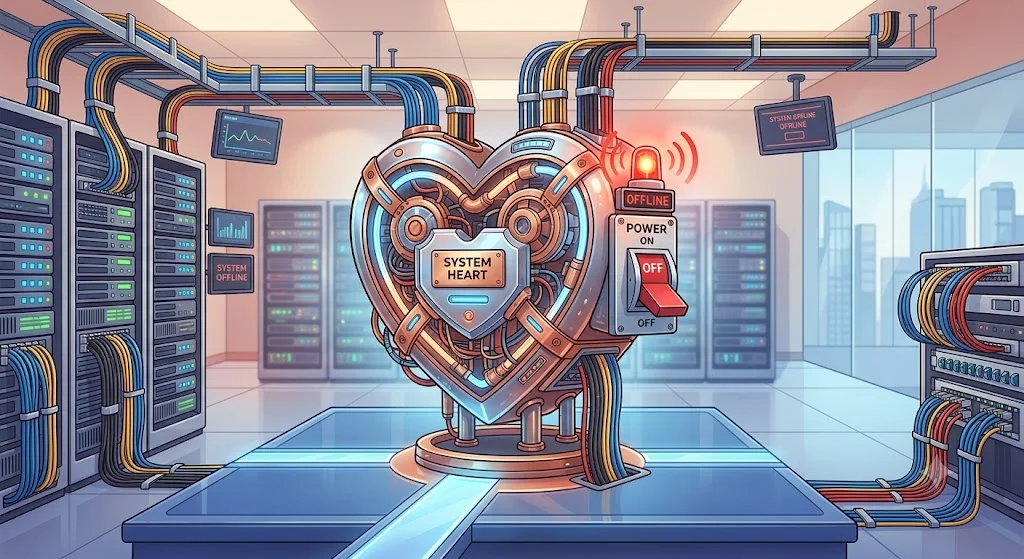
One more term worth knowing: avoidant deactivation — the abrupt switch-off avoidants do when closeness gets too intense. The warm weekend followed by a cold week isn't a change of heart. It's a circuit breaker.
Anxious Attachment: Emotionally Unavailable in the Storm
Here's the version almost nobody writes about. The anxious partner — the one who pursues, texts, needs, feels everything loudly — looks like the opposite of unavailable. But catch the anxious attachment system in full protest, and try to make contact:
- Try to reach a person mid-outburst with a real feeling — it won't land. The storm has no receivers, only transmitters.
- The protest behaviors — accusations, ultimatums, "fine, leave then" — aren't communication. They're flares, and flares can't hold a conversation.
- After the storm, shame moves in and locks the door from the other side: too embarrassed to reopen what happened, the anxious partner goes unavailable about their own eruption.
This matters because in the pursue-withdraw cycle, both partners take turns being unreachable: he behind a wall of silence, she inside a storm of protest. Two different buildings, same locked door. And it means the work isn't "fix the avoidant" — it's teaching both nervous systems that contact is safe.
Why Am I Drawn to Emotionally Unavailable Partners — and Why Do I Stay?
The uncomfortable question after one more closed partner: why do I keep choosing them? Three honest mechanics, briefly:
- Familiar equals attractive. If love in childhood had to be earned from someone distant, the nervous system tags distance as "this is what love feels like." Available partners register as boring — the alarm system stays quiet, and quiet is unfamiliar.
- The almost-win. An unavailable partner gives just enough — the rare warm weekend — to keep hope alive. Intermittent reward is the strongest hook there is; casinos run on it.
- Staying is the old strategy. Leaving means feeling the original abandonment. Staying and trying harder is what the child in you always did instead.
Can an Emotionally Unavailable Person Change?
Yes — with one non-negotiable condition: they have to want it. Not comply with your ultimatum, not attend counseling as a peace offering — actually want access to their own inner life.
What you control is smaller and more powerful than it sounds: your half of every conversation. Change your half — drop the pursuit, name your feeling in one clean sentence, stop watering the cycle — and the whole system has to reorganize around it. Sometimes that's what finally makes the other side of the wall curious.
Emotional Connection: The Opposite of Unavailability
Every article about this topic describes the disease. Almost none describe the health. So the reader ends up knowing exactly what they don't have — and having no picture of what they're trying to build. Let's fix that.
What Real Emotional Connection Looks Like
Emotional connection isn't constant deep talk or perfect harmony. In day-to-day life it's smaller and sturdier:
- Your feeling can land. You say "I had a brutal day" and the other person turns toward it — asks, or just sits closer. Nothing needs fixing. It landed; that's the whole event.
- Both weather systems fit in the room. Your anxiety doesn't evict their calm; their bad mood doesn't require your exile. Two inner worlds, one shared space.
- Conflict has a floor. You can fight and know, mid-fight, that the relationship isn't on the table. That floor is what makes honesty affordable.
- Silence is warm. With connection, saying nothing together is rest. Without it, saying nothing is the loudest sound in the house.
Signs Connection Is Still Possible
Even behind a serious wall, some signals say the wiring is intact:
- They stay physically near you even when words are gone — the body votes for contact even when the mouth abstains.
- Small acts of care continue through the coldest stretches: the coffee still appears, your car still gets its oil change.
- Once in a rare while, in the dark or in the car, a door cracks open unprompted — one real sentence about what's inside.
- After conflicts, they find small ways back: a joke, a touch, food. Repair attempts are the strongest predictor there is.

If you recognize these, what's between you isn't absence. It's a translation problem. And translation problems have a method.
How to Reach an Emotionally Unavailable Partner
Everything above leads here. If your person is behind the wall — avoidant, flooded, or storming — what actually has a chance?
Start with what reliably fails:
- Pressure — the direct assault. "We need to talk. Now." To a shutdown nervous system this is the fire alarm; it produces more wall.
- Ultimatums — they can force attendance, never access. You can make a person sit in the room; you can't make them arrive.
- Diagnosing them — "you're avoidant, you're emotionally unavailable, I read about you." Labels land as verdicts and bolt the door.
- Waiting for them to change first — the most popular strategy and the slowest. The wall doesn't dismantle itself while being watched.
What works runs through the only thing you control — your half of the conversation:
- Regulate before you speak. A flooded person can't hear you, and a flooded you can't say it right. Ninety seconds of breathing beats ninety minutes of circling.
- Bring one feeling, not the case file. One sentence: what happened, what you felt. No history, no exhibits A through F.
- Name — don't accuse. "When you went quiet at dinner, I felt shut out" opens differently than "you always ignore me." The first is a window; the second is a subpoena.
- Make it safe to answer. How to make an avoidant feel safe in one line: no punishment for honesty. If the crack in the door gets criticized, it's the last crack you'll see.

Simple to list — genuinely hard to do mid-hurt, alone, at 11 p.m. That's the moment Evenvoice is built for. It's not a chatbot with comfort phrases and not a lecture on attachment theory: it's a structured breakdown of one real situation — yours. It walks you from the noise to the feeling, from the feeling to its cause, to the precise words, and to what you actually want to be different. The kind of sentence that gets through walls — because it's true and it's yours.